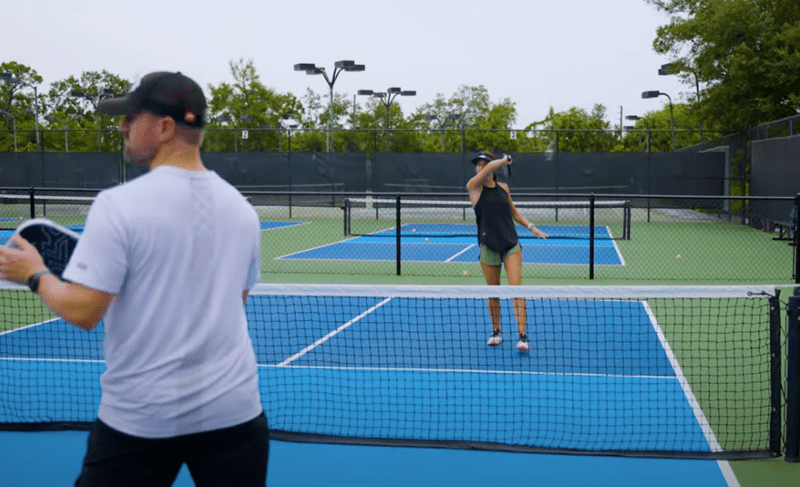
Pickleball is won and lost at the kitchen line. The ability to sustain dink rallies, recognize attackable balls, and reset under pressure separates 3.5 players from 4.5 players more than any other skill set.
The Dink: What It Is and Why It Matters
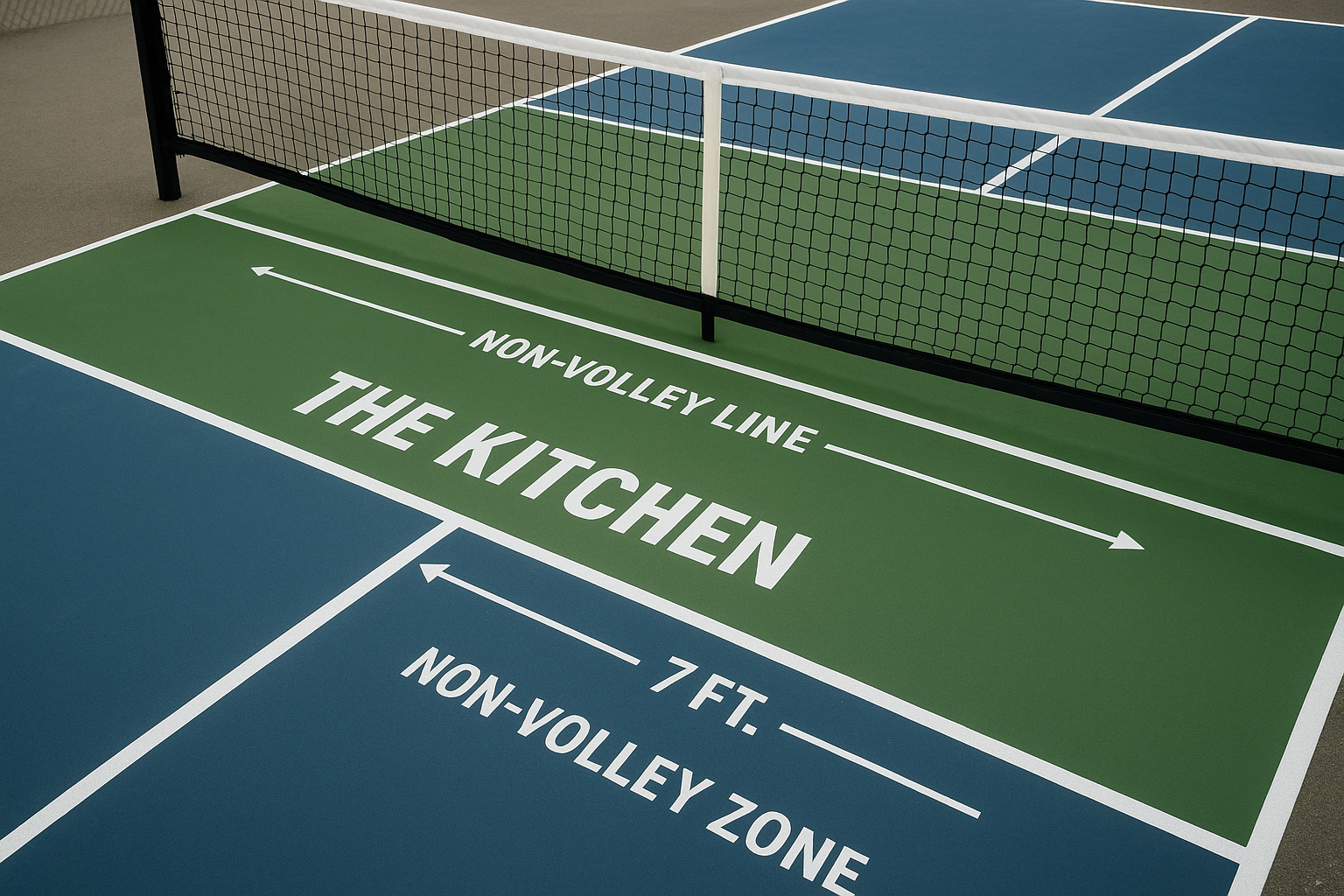
A dink is a soft shot that lands in the opponent's kitchen. Its purpose is to keep the ball low and force your opponents to hit up — preventing them from attacking. A good dink rally is a chess match, with each player trying to create an opportunity to attack while avoiding giving one up.
Positioning at the Kitchen
Your feet should be at the NVZ line. Not behind it — at it. Every step back you take gives your opponents more angle and more time to attack.
Stance: Athletic, balanced, weight slightly forward. Paddle up and ready.
Movement: Side-to-side shuffle, not crossing your feet. Stay low.
Reading the Dink
Not all dinks are equal. Learn to read:
- High dinks (above net height): Attackable. Speed up cross-court or at the hip.
- Low dinks (below net height): Reset. Don't try to attack.
- Wide dinks: Create angle. Can be attacked or used to pull opponents out of position.
The Speed-Up
The dink rally ends when someone speeds up. Knowing when to initiate and when to reset is the highest-level skill in pickleball.
Attack when: The ball is above net height, you have a clear angle, and your opponents are out of position.
Reset when: You're out of position, the ball is low, or you're under pressure.
The kitchen game takes years to develop. Drill dinks daily, play with better players, and be patient. It's the most rewarding part of the game to master.